Explore
Mission BriefsLive archive · by the team at Pirxey

Stay sharp in the AI Era. One interactive brief at a time.

Each brief takes one concept from shipping real software and makes it hands-on: a working widget to test the idea, the Skills, Gems and custom GPTs we built around it, and the sources behind it.

Latest
022#AI transformation

AI readiness: twelve questions, no consultant

Before the first AI project, we check six things: where the data lives, whether there is a reason with a number on it, who owns the rules, whether people know what the tool is bad at, whether the plumbing can take a change, and whether the backlog is ranked. This brief turns that into twelve questions you answer yourself by picking the sentence that sounds like your company. You get a band from Scattered to Measured, every number with its denominator, the pillar to look at first, and our own answers, drawn from the way we run Pirxey World, our monthly Pulse and our factory, to compare with. Self-reported, kept in your browser, no form.

AI transformationReadinessLeadershipSelf-assessment
Learn more
021#Pirxey World

Five months in: the founder is third

We switched on Pirxey World on 15 May 2026 and expected it to be the founder's project for a long while. Counted this morning: 235 changes to the shared core from six people, and he is third on that list. Here is the short, honest version of five months — the assumption we got wrong, the one we are still getting wrong, and what today's count actually says.

Pirxey WorldCase studySecond brainAI at work
Learn more
020#AI transformation

Pirxey World: the questions we stopped asking

We run a 130-person software company and built our second brain for ourselves. These are the questions we struggled to answer across departments, and the mistakes, costs and access problems we still face.

AI transformationLeadershipPirxey WorldManagement
Learn more
019#Pirxey World

Pirxey World: our second brain at the leadership table

Four leadership questions from our work, with evidence, gaps and one fictional decision scene. How Pirxey World brings accessible records into a discussion.

Pirxey WorldSecond brainCase studyManagement
Learn more
018#Case study

AI Software Factory: a working product in six weeks

Our AI software factory built a consumer product with payments, subscriptions and media generation in 44 days: nine people, 756 accepted changes, half of them within 48 minutes, 2,168 hours. The delivery loop as a diagram you can walk; the role of AI and the role of people; the backend and frontend pieces and the techniques we carried in from earlier projects; and why a first working version of most products now fits in six to eight weeks and $60k–$150k.

017#Pirxey World

Pirxey World: our second brain, with the access we already had

We built Pirxey World around the access people already had. How personal logins and separate GitHub repositories let us share knowledge and skills, with the CRM exception still visible.

Pirxey WorldSecond brainCase studyAccess
Learn more
016#AI transformation

Pirxey World: how our second brain finds what matters

Follow a fictional question through Pirxey World's rules, maps, indexes, knowledge and skills to a tool. See what enters context, what access changes, and why an old source still needs checking.

015#Pirxey World

Pirxey World: our second brain, 130 people wide

A second brain is one place where what the company knows is written down, read by every person's assistant with that person's own logins. Ours reaches twenty-five tools in six categories: chat, mail, calls, the customer database, tasks, code, hours, invoices, the wiki. One person can look everywhere and cross thousands of records without copying a thing. Nine questions a manager asks, the route each one takes, and the case study: 33 of the 77 who answered our survey have it running, four months in.

Pirxey WorldCase studySecond brainAI at work
Learn more
014#AI adoption

The AI Pulse: 77 people, no grading, no filter

Every month, we invite everyone at Pirxey to answer the same four-minute pulse: which tools, which models, how far up the ladder, how many hours AI gave back and how many it burned, what blocks them. Aggregates only, never a scorecard. Here is the latest edition in full: adoption is climbing, and the hard part is not the models.

AI adoptionTeam surveyHuman-supervised AIEvidence+1
Learn more
013#Human-supervised AI

Do you even use AI? The receipts.

Clients ask, politely, whether we actually use AI or just say we do. Fair question. Here are the receipts: every commit on a live client project carries its AI share, model and tool in the prefix, a weekly report is generated from git log, and our own team survey counts the hours AI gave back and the hours it wasted. Plus the part that matters most — who is in the middle, and whose name is on every merge.

Human-supervised AIDelivery transparencyGit metricsEvidence+1
Learn more
012#Software architecture

Architecture is what the agent sees

Explore how module boundaries change an agent's reading scope, blast radius and review burden. Set up ports, typed contracts, tests and PR gates with a concrete Java/Spring and frontend example.

Software architectureAgentsHexagonal architectureContracts+1
Learn more
011#AI features

Adding AI to your product: will it hold?

You want an AI feature in your product. You are not sure it holds up technically or financially, and you are not sure who builds it. Pick the feature archetype, set the traffic, switch the safeguards on and off — output validation, handling of wrong answers, tests of the whole path, cost caps, PII — and watch what survives contact with users. A rule set calibrated on features we shipped, not demos we gave.

AI featuresLLM in productionProduct engineeringCost+1
Learn more
010#Decision-making

How much does an intelligent decision weigh?

Every prompt, every accept, every 'ship it' is a decision, and with AI in the loop one person makes hundreds a day. Each one needs the same four things: knowledge, speed of thought, reading with comprehension and clearly stated expectations. Set the profile of the person deciding, set how fast they find out they were wrong, and watch a month of decisions — and what a good decider is worth in hours.

Decision-makingEngineering leadershipAI-native teamsJudgement+1
Learn more
009#AI transformation

How to approach AI transformation

Not a program. A compass. Score your company on five things in plain language — data, architecture, security, people, process — and get a ninety-day plan built from your weakest two, always starting with one repeatable workflow. Then run any process through five questions to see whether it should be automated at all.

AI transformationReadinessSecurityData+1
Learn more
008#Workflow automation

AI workflow automation playbook

Design one workflow with rules, an LLM or an agent. Build its six-step blueprint, compare modeled cost and review time, find control gaps and take away a concrete pilot plan.

Workflow automationOperationsLLMAgents+1
Learn more
007#Software maintenance

Shipping new things while drowning in tickets

See how support tickets, release regressions and testing divide your team's week. Adjust the load and compare six months with a dedicated maintenance stream.

Software maintenanceProduct deliveryQuality assurance
Learn more
006#AI engineering

Your developers got faster. Did your product?

AI widened the coding highway. It did nothing for the streets around it: product discovery, analysis, review, security checks and testing still run at human speed. Change the traffic, find the queue, and see what actually reaches customers — then see who has the town built around the highway, and who is still waiting at the exit.

AI engineeringProduct deliveryQuality assuranceCode review+1
Learn more
005#AI-native SDLC

AI software factory: where the humans go

For one week in July, a software factory ran tickets end to end — plan, build, verify, review — with humans making exactly two decisions per ticket. Fifty tickets, $2.90 each, minutes of oversight. Assemble the line yourself from blocks and see where the humans have to stand, what happens when you remove them, and why most of the work is the machinery nobody demos.

AI-native SDLCAgentsEngineering processDark factory+1
Learn more
004#Case study

PirxeyOS: 20 days to build, 30 weeks to keep alive

PirxeyOS is the operating system we are building for our own company: time tracking, HR, a skills matrix, employee records, onboarding — and more on the way. The first module replaced Clockify. One developer, AI-native, a first version we were proud of in about twenty working days. Then it turned out that the first version is the easy part. Scrub through 32 weeks of commit history — every fix, every feature, every AI co-author line — and see what the demo cost, and what the product cost after it.

Case studyInternal toolsAI-native developmentMaintenance+1
Learn more
003#AI engineering

The new Pareto: 95/5

Twenty percent of the effort used to buy eighty percent of an MVP. With AI it's five percent for ninety-five — of what the demo shows. Drag the sonar down the iceberg and price the part nobody demos: edge cases, permissions, tests, migrations, real devices. A Pirxey field model, calibrated on 587 commits of our own product.

AI engineeringMVPEstimationProduct delivery+1
Learn more
002#Email

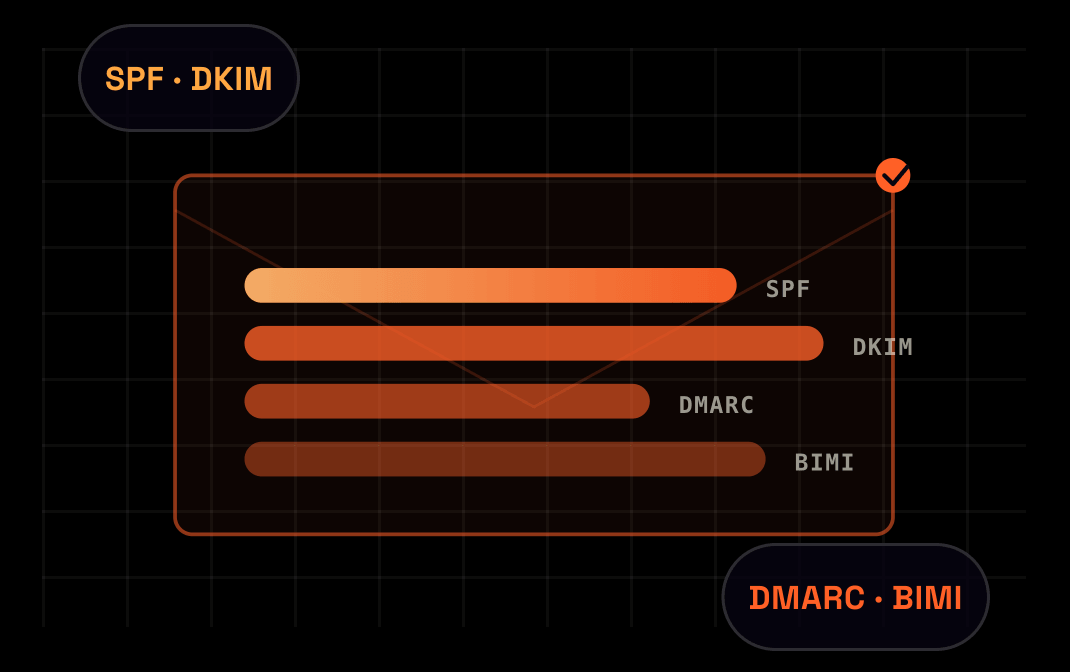
Why your emails go to spam

Type any domain. Get a verdict on the four layers of email authentication in under two seconds — what's configured, what's broken, and what to paste into your DNS. No signup, no paywall. The same audit a Solution Architect runs by hand — in your browser, instant, free.

001#AI engineering

Why 10× isn't a constant

Your client built that module solo with Claude in an evening. Your team spent a quarter on the same scope. Drag the slider — see why AI leverage decays as a codebase grows. A Pirxey field model from 53 production projects.

AI engineeringProductivityScaleEngineering management
Learn more

Why we write these. And why they look like this.

01

Built, not described.

Every brief ships with a widget you can grab and play with. If we can't make the concept playable, we don't ship the brief.

02

Linked, not locked.

Each brief points to the Pirxey-authored Claude Skills, Google Gems and custom GPTs we use day-to-day. Take them, fork them, use them.

03

Sourced, not invented.

Every number maps to public research or our own delivery telemetry across 100+ shipped products. Click through and verify.

Have a concept you wish someone made playable?

Book 30 minutes with Mike to talk it through — or drop a suggestion by email and we'll get back.

Discovering new orbits in progress...